
- 31. August 2026
- Posted by: Die Redaktion
- Category: READING TIPS
AI Automates Production—But What Comes Next? A ZHAW Study Highlights the Gap
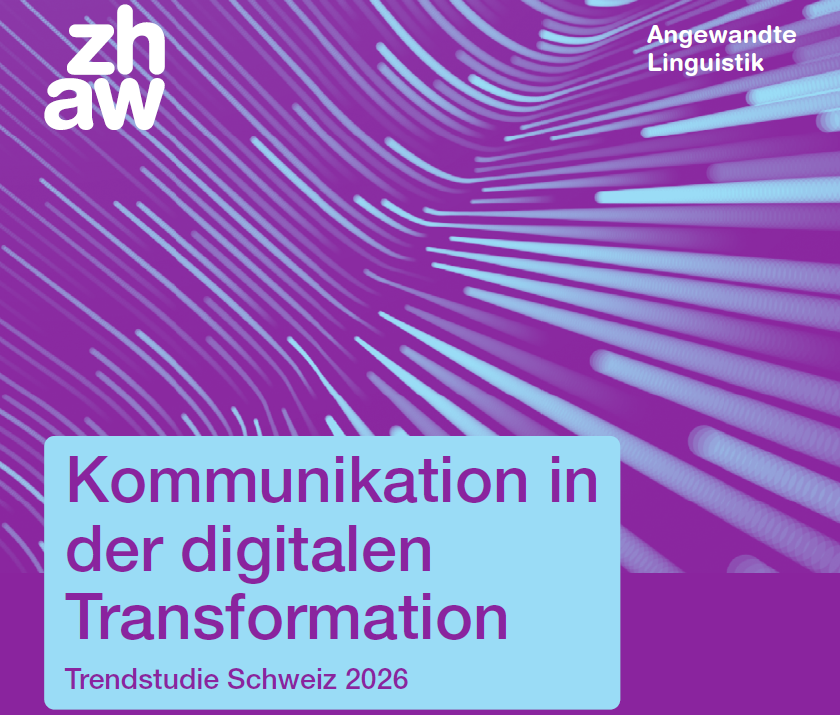
How are generative AI and digital technologies changing the way communication departments work? This question is the focus of the trend study “Communication in the Digital Transformation,” which has been published every two years since 2018. The 2026 edition by Rosenberger et al. is based on a survey of 115 CCOs in German-speaking Switzerland as well as ten in-depth interviews with experts.
From a technological standpoint, the issue has been settled. Ninety-nine percent of departments use generative AI, which has evolved from an experimental tool to an infrastructure for daily work and now handles tasks that were long considered impossible to automate. Self-assessed digital maturity has reached an all-time high, after many CCOs had revised their estimates downward in 2024 in the wake of the AI shock.
From an organizational standpoint, however, much remains undecided. The newsroom remains relevant but no longer dominates; the majority works in hybrid models combining formal structures and agile roles. About 40 percent of departments have undergone structural changes in the past two years, increasingly driven by cost pressures. Where production can be automated, the value of the communications function shifts toward judgment and strategic advice.
This gives rise to the challenge that the authors foresee for the coming years. The operational relief provided by AI must be translated into a visibly strengthened strategic role before automation becomes a justification for cutting resources.