
- 6. May 2026
- Posted by: Julia Heymann
- Category: BEST PRACTICES
“You have to get involved with each other” – Insights into the transformation at Atruvia
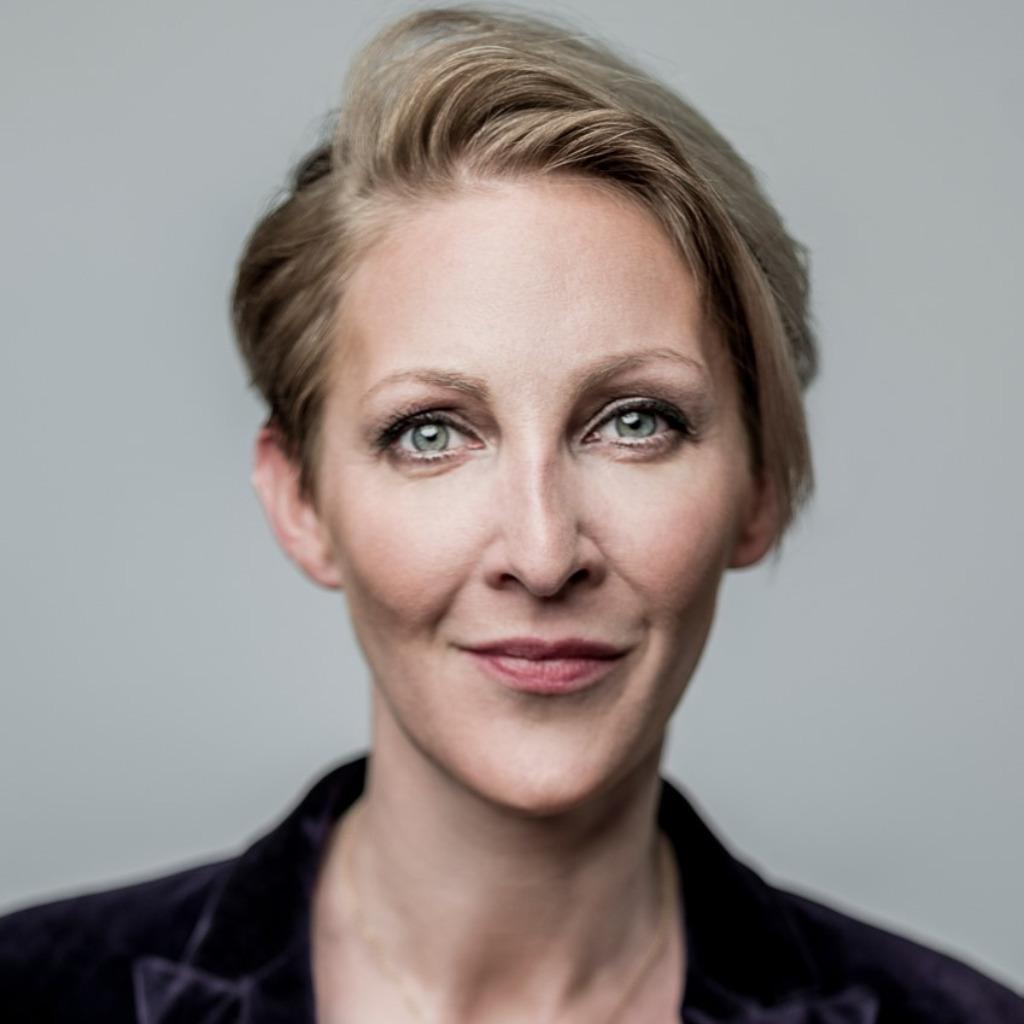
Interview with: Julia Heymann, Tribe Lead Corporate Communication, Atruvia AG
Atruvia is the digitalization partner of the cooperative FinanzGruppe – and, as Julia Heymann herself says with a grin, “the biggest IT company in Germany that nobody knows”. With around 5,500 employees, almost 900 customer banks and over 150,000 bank workstations, the company is part of Germany’s critical infrastructure. In 2020, Atruvia started its transformation into an agile organization, aligned with the Spotify model, and since 2024, corporate strategy and corporate communications have been working together in a joint service field. We spoke to Julia about gold treasure, mines and dealing with interfaces.
Julia, you introduced the Spotify model in 2020. What does that mean for your work?
At Atruvia, this means above all: cross-functional teams with end-to-end responsibility for products and topics, and no more traditional silos. In addition to the Management Board, there are only two management levels. The focus is on speed, personal responsibility and scalable collaboration. However, we are also constantly developing our collaboration model. Clarity in roles, tasks and responsibilities is crucial – otherwise it won’t work.
One of your special features is the separation of technical and personnel management. How should we imagine this?
We have replaced traditional departments within our service and business areas with tribes and work at this level in the management tandem. As Tribe Lead, I am responsible for the technical performance of my unit, while the People Lead takes care of all disciplinary matters, employee development and empowerment. This only works if the wheels mesh well. I need to be able to report back at any time where someone is performing particularly well or where we have a development issue. Conversely, the People Lead reflects what comes out of performance dialogs or what the workload looks like in our unit – and that in turn has implications for me in terms of assigning colleagues to topics.
In 2024, you took a bigger step: strategy and communication in a service field. What was the idea?
Atruvia is constantly evolving. The idea behind the creation of the new Corporate Strategy & Communication (CSC) service area was to establish end-to-end responsibility for processes ranging from strategy development to corporate communications: Our six tribes are thus responsible for corporate strategy including the sustainability hub, our colleagues in in-house consulting take on the tasks of internal management consulting – and with committee, internal and external corporate communication and events, a tribe for brand management, insights and governance, we ensure the implementation of corporate strategy and consistent message management. As Tribe Lead for Corporate Communication (CCO), I am responsible for communication for our internal stakeholders and public relations.
One and a half years after the launch: what is your assessment?
I like to describe this with two images: Gold treasure and mine. The golden treasure is the proximity we now have in terms of content. We have never been so close to the strategy work, to M&A, to the projects from Inhouse Consulting. This creates depth and speed, and we have managed to close the gap – there is no longer a gap between strategy development and communication.
And the mine?
You also have to dig for gold. We bring together very different ways of working. A corporate strategy unit works differently to a corporate communications unit, an event unit differently to a committee unit. We had to overlap our perspectives and also rubbed up against each other. We went through our change curve comprehensively and learned a lot. That was good and healthy – but it also took strength.
What got you through this phase?
An important success factor in the new structures was exchange and routines. Right from the start, we committed to developing good new routines and putting them into practice. A service field update once a month, a campus event at one location every six months, cross-tribe leads routines, internal tribe routines and, for example, an editorial conference in my newsroom. One thing is important: don’t overengineer. We could set a lot more dates, because we have enough content – but then we won’t get anything out on the street in the end.
A topic that was discussed in the group: Marketing was shifted to sales at your company. Painful?
The motivation behind this was to strengthen the sales organization, and I can well understand that. But yes, the proximity to our marketing colleagues that we were able to enjoy in a joint service area is no longer a given – now we have to work across service area boundaries. This is an interface that we have to work on continuously – not only in message management, but also in terms of channels. For example: my team is responsible for the website, but the content also comes from Marketing. Such topics only work across all service areas. We use a joint planning platform for this and have the greatest possible transparency in our activities.
Isn’t the solution in the newsroom model?
A totally valid idea. A few years ago, we tried to establish a newsroom that works across tribe and service field boundaries – and it didn’t work to that extent. Looking back, we probably weren’t mature enough back then and probably wanted too much at once. Today, I run a newsroom for classic corporate communications – internal communications, public relations, a little overarching customer communications and, of course, positioning work. This is how we manage communication in CCO. Across the board, we have set up a quarterly planning process in CSC that includes committee and corporate communications as well as events. We define joint focus topics, and there are topic owners and topic sponsors in the tribes. We are in the fourth iteration and are currently moving into an extended evaluation model. A really exciting position.
Are you actually doing strategy now – or are you just closer to it?
We all work on the basis of strengths. I would never claim that I could define corporate goals better than our strategy colleagues. But we are involved much earlier and are used as a sounding board at an earlier stage. A current example of cross-tribe collaboration: our next management meeting. This used to be a topic where we thought about what the follow-up communication would look like. Today, people from CCO sit directly at the table when the content and processes are planned. The output is really different as a result, the keywords here are also consistency and depth of content – and collaboration is improving bit by bit. However, everyone remains in their core area of expertise.
What is your most important piece of advice for communication managers who are facing a similar integration process?
It requires a high degree of engagement with one another. You can’t fool yourself: Different ways of working, different types of results – that takes a moment. We had to actively work on mutual appreciation for what the other person does in their trade. Since then, we have been working very closely together.
The interview is based on the Jour Fixe of the Organization & Processes Cluster of the AG CommTech on 15 April 2026